In stock
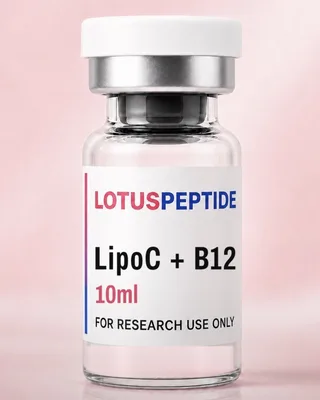
Lipo-C + B12 10ML
Lipo-C + B12 is a lipotropic formulation, not a single compound. The Lipo-C and methionine/inositol/choline products in FDA recall records contained methionine, inositol and choline, with L-carnitine, a form of vitamin B12 or both, and the components and their amounts differed between makers. The versions in FDA records were made by compounding pharmacies, and no FDA-approved drug of that name was found; cyanocobalamin, one form of B12, is FDA-approved on its own for vitamin B12 deficiency due to malabsorption.
- Single Vial$30
- 5-Pack (5 vials)$26 per vial$130
- 10-Pack (10 vials)$23.50 per vial Lowest per vial$235
Ships from the United States within 1 business day, to the US and the UK and Europe. Laboratory research use only.
Lab results
Certificates for this compound are published on the lab results page as batches are tested.
At a glance
- Strength
- 10 ml
- Also known as
- Lipo-C, MIC + B12, lipotropic formulation
What Lipo-C is
"Lipo-C" is a trade name, not a chemical name, so each product's label defines what is in it. FDA records of recalled compounded products show how much the formula varies 2. A "Lipo C" from one Tennessee compounding pharmacy listed methionine 12.5 mg, inositol 50 mg, choline 100 mg, methylcobalamin 1 mg and L-carnitine 200 mg, without stating the volume those amounts refer to 2. A "Lipo-C" from a second pharmacy listed, per mL, methionine 25 mg, inositol 50 mg, choline chloride 50 mg, L-carnitine 100 mg and methylcobalamin 1 mg, plus five other B-vitamin compounds and the local anaesthetic lidocaine 2. A third product, from a Utah pharmacy and not named Lipo-C, listed methionine 25 mg, inositol 50 mg and choline 50 mg per mL with cyanocobalamin, not methylcobalamin, at 1 mg per mL 2. All three were withdrawn in firm-initiated Class II recalls 2. For the 10 mL LotusPeptide vial, the label states the exact components and amounts. Where a certificate of analysis for a lot has been published, it is listed with our lab results.
What "lipotropic" means
In nutrition research, a lipotropic substance is one shown, mainly in animals, to hasten the removal of fat from the liver or to reduce hepatic lipid synthesis or deposits 1. The mechanisms proposed are increased phospholipid synthesis through the transmethylation pathway, which supports the export of triglyceride-rich lipoproteins from the liver, and enhanced fatty-acid beta-oxidation 1. A 2013 review names choline, betaine, myo-inositol, methionine and carnitine as the main plant lipotropes 1. The same review notes that, for the plant compounds it surveyed, intervention studies in humans are practically non-existent 1. The review's definition concerns fat in the liver, mainly in animal studies; it does not address body fat or body weight 1.
The components
Methionine
L-methionine is one of the two sulfur-containing amino acids built into proteins, the other being cysteine 4. Its metabolism begins with activation to S-adenosylmethionine, a cofactor used in animals mostly for methylation reactions 4. The homocysteine those reactions produce can be remethylated to methionine or converted to cysteine by the transsulfuration pathway 4. Cysteine is a precursor of glutathione, and its availability is a key determinant of glutathione synthesis 45. Methionine and choline are the two nutrients removed in the methionine-choline-deficient (MCD) diet, a laboratory model of fatty liver disease 6. C57BL/6 mice fed that diet for two weeks or more developed severe steatohepatitis with raised serum AST and ALT 6. In rats fed diets that already contained myo-inositol or choline, adding DL-methionine at 0.2% by weight did not significantly change liver triglyceride concentrations 7.
Inositol
Myo-inositol is the inositol form named in the lipotrope literature 1. In cells it forms phosphatidylinositol and related phosphoinositides, whose turnover releases the second messenger inositol 1,4,5-trisphosphate, which appears to mobilize calcium from internal stores 8. Impaired release of plasma lipoprotein, increased fatty-acid mobilization from adipose tissue and enhanced fatty-acid synthesis in liver have all been implicated in the liver triglyceride accumulation of experimental inositol deficiency 8. In rats fed diets without choline, liver triglyceride varied inversely, up to a point, with the level of dietary myo-inositol 7. Compared at 5.4 mmol per kg of diet, myo-inositol was as efficient as choline on a molar basis in preventing triglyceride accumulation in the liver 7.
Choline
Choline was officially recognized as an essential nutrient by the Institute of Medicine in 1998 9. Humans need it for methyl donation, membrane function and neurotransmission, although some is made through de novo synthesis of phosphatidylcholine, a pathway up-regulated by estrogen 10. For choline there is human evidence on deficiency: humans eating low-choline diets develop fatty liver and liver damage 11. In a controlled feeding study of 57 adults moved to a diet with less than 50 mg choline per 70 kg per day for up to 42 days, 77% of men and 80% of postmenopausal women developed fatty liver or muscle damage, against 44% of premenopausal women 10. Organ function returned to normal when choline was added back to the diet 10. These studies concern deficiency; they did not test added choline in people who were not deficient 1011.
L-carnitine
Carnitine is essential for the transfer of long-chain fatty acids across the inner mitochondrial membrane for beta-oxidation 12. The body can make it, and the diet supplies it from meat and dairy products 12. L-carnitine, also called levocarnitine, is the 2(R) form, chemically 3-carboxy-2(R)-hydroxy-N,N,N-trimethyl-1-propanaminium, inner salt 13. FDA has approved levocarnitine (Carnitor) for primary systemic carnitine deficiency and for inborn errors of metabolism that cause a secondary carnitine deficiency 13.
Vitamin B12: cyanocobalamin or methylcobalamin
The FDA-approved cyanocobalamin label describes vitamin B12 as essential to growth, cell reproduction, hematopoiesis, and nucleoprotein and myelin synthesis 15. Its absorption from the gut depends on intrinsic factor, and intrinsic factor deficiency causes pernicious anemia 15. Inside cells, methylcobalamin and adenosylcobalamin are the coenzymes for methionine synthase and methylmalonyl-CoA mutase respectively, so B12 and methionine meet in the same pathway 414. Cyanocobalamin is the most widely used form of vitamin B12, and hydroxocobalamin is equally effective 15. The Lipo-C records above used methylcobalamin, and the third record used cyanocobalamin 2. A 2015 review found that methylcobalamin and adenosylcobalamin follow the same route of intracellular processing as cyanocobalamin, and concluded that supplying them is unlikely to be advantageous compared with cyanocobalamin 14.
Regulatory status
As of October 2026, no FDA-approved drug named Lipo-C, or combining methionine, inositol and choline, was found in DailyMed, the NIH database of drug labels. The products under these names in FDA records came from compounding pharmacies 2. In 2020 FDA told one pharmacy that drugs it compounded without valid prescriptions for individually identified patients, a lipotropic solution among them, did not meet the conditions of section 503A and so lost its exemptions, including from the FDA approval requirement 3. FDA's list of substances nominated for 503A compounding, updated May 14, 2026, places choline chloride and methylcobalamin in Category 1, substances under evaluation, with glutathione and NAD+ 16.
Cyanocobalamin, by contrast, is approved: the generic label indicates it for vitamin B12 deficiencies due to malabsorption, which may be associated with pernicious anemia, gastrointestinal pathology, dysfunction or surgery, fish tapeworm infestation, malignancy of the pancreas or bowel, and folic acid deficiency 15. That approval covers the single-ingredient cyanocobalamin product, not combinations that contain it 15.
FDA has also acted on marketing claims in this space. In 2018 it warned a supplement firm that claims such as "Improves Triglyceride Level in Blood" for its "Lipotropic Formula" showed the product was intended for use as a drug, making it an unapproved new drug 17. In March 2025 it told Amazon.com that "LemonBottle Ampoule Solution" (see Lemon Bottle) and an "L-Carnitine Body Serum Ampoule", labelled a "lipolytic solution", were unapproved new drugs 18. Claims about body fat made for lipotropic products come from their sellers; as of October 2026 this page found no controlled study of a Lipo-C formulation that tests them.
What is not known
- The combination. PubMed searches on October 17, 2026, for "lipotropic", for methionine with inositol and choline, and for "Lipo-C" or "MIC B12" found no randomized or controlled study of a combination product.
- Transfer from models to people. Most lipotrope evidence comes from deficiency diets in rats and mice, and the human choline evidence concerns deficiency 16710.
- Chemistry in the vial. As of October 2026 this page found no published data on how stable these solutions are or whether their components interact.
- This product's formula. The components, their amounts and the form of B12 are set by the label, and published formulas differ 2.
Questions
What does MIC stand for in MIC + B12?
MIC products combine methionine, inositol and choline, all three listed among the main lipotropes in a 2013 review 1. In FDA enforcement records, compounded Lipo-C and methionine/inositol/choline products added vitamin B12 as cyanocobalamin or methylcobalamin, and some also listed L-carnitine and other B vitamins 2.
Is Lipo-C FDA approved?
No FDA-approved drug named Lipo-C was found as of October 2026; the products in FDA records were compounded by pharmacies 2. FDA has cited a pharmacy whose compounded lipotropic solution did not meet the conditions of section 503A 3. One component, cyanocobalamin, is FDA-approved on its own for vitamin B12 deficiencies due to malabsorption 15.
What is the difference between cyanocobalamin and methylcobalamin?
Both are forms of vitamin B12 (cobalamin). Methylcobalamin is one of the two coenzyme forms used inside cells, the cofactor of methionine synthase, while cyanocobalamin is the most widely used form in products and is converted inside cells 1415. A 2015 review concluded that methylcobalamin is unlikely to be advantageous compared with cyanocobalamin for preventing or treating deficiency 14.
What does lipotropic mean?
A lipotropic substance is one shown, mainly in animals, to hasten the removal of fat from the liver or reduce hepatic lipid synthesis or deposits, largely by supporting phospholipid synthesis for lipoprotein export and fatty-acid oxidation 1. Choline, betaine, myo-inositol, methionine and carnitine are the main examples 1. The review's definition concerns fat in the liver, mainly in animal studies, and does not address body fat 1.
Is Lipo-C the same as Lemon Bottle?
No. Lipo-C is a mixture of lipotropic nutrients and vitamin B12 2. LemonBottle Ampoule Solution was marketed as a lipolysis product, and FDA described it as an unapproved new drug in a 2025 warning letter 18.
Does LotusPeptide ship Lipo-C + B12 to the UK and Europe?
Yes. Lipo-C + B12 ships from the United States to the United Kingdom and 13 EU countries by UPS Worldwide Express: $55 flat for a standard package, typically 2 to 5 days in transit. Import VAT, duties and fees are paid by the recipient on delivery, and orders to the UK and Europe are paid in cryptocurrency at checkout. Details are on the UK and Europe page.
Is there a certificate of analysis for Lipo-C + B12?
Not yet. No batch certificate for Lipo-C + B12 is published at the moment. Certificates are added to the lab results page as each batch is tested.
References
- Fardet A, Chardigny JM. Plant-based foods as a source of lipotropes for human nutrition: a survey of in vivo studies. Crit Rev Food Sci Nutr. 2013. pubmed.ncbi.nlm.nih.gov
- FDA Enforcement Reports (openFDA drug enforcement records D-172-2014, D-0269-2017 and D-0685-2017): compounded Lipo-C and methionine/inositol/choline products. api.fda.gov
- FDA. Warning letter: Randol Mill Pharmacy - 610545 - 09/17/2020. www.fda.gov
- Brosnan JT, Brosnan ME. The sulfur-containing amino acids: an overview. J Nutr. 2006. pubmed.ncbi.nlm.nih.gov
- Lu SC. Glutathione synthesis. Biochim Biophys Acta. 2013. pubmed.ncbi.nlm.nih.gov
- Itagaki H, Shimizu K, Morikawa S, et al. Morphological and functional characterization of non-alcoholic fatty liver disease induced by a methionine-choline-deficient diet in C57BL/6 mice. Int J Clin Exp Pathol. 2013. pubmed.ncbi.nlm.nih.gov
- Andersen DB, Holub BJ. The relative response of hepatic lipids in the rat to graded levels of dietary myo-inositol and other lipotropes. J Nutr. 1980. pubmed.ncbi.nlm.nih.gov
- Holub BJ. Metabolism and function of myo-inositol and inositol phospholipids. Annu Rev Nutr. 1986. pubmed.ncbi.nlm.nih.gov
- Zeisel SH, da Costa KA. Choline: an essential nutrient for public health. Nutr Rev. 2009. pubmed.ncbi.nlm.nih.gov
- Fischer LM, daCosta KA, Kwock L, et al. Sex and menopausal status influence human dietary requirements for the nutrient choline. Am J Clin Nutr. 2007. pubmed.ncbi.nlm.nih.gov
- Corbin KD, Zeisel SH. Choline metabolism provides novel insights into nonalcoholic fatty liver disease and its progression. Curr Opin Gastroenterol. 2012. pubmed.ncbi.nlm.nih.gov
- Longo N, Frigeni M, Pasquali M. Carnitine transport and fatty acid oxidation. Biochim Biophys Acta. 2016. pubmed.ncbi.nlm.nih.gov
- DailyMed. CARNITOR (levocarnitine) tablet. Leadiant Biosciences, Inc. (NDA018948). dailymed.nlm.nih.gov
- Obeid R, Fedosov SN, Nexo E. Cobalamin coenzyme forms are not likely to be superior to cyano- and hydroxyl-cobalamin in prevention or treatment of cobalamin deficiency. Mol Nutr Food Res. 2015. pubmed.ncbi.nlm.nih.gov
- DailyMed. CYANOCOBALAMIN injection, solution. Fresenius Kabi USA, LLC (ANDA080557). dailymed.nlm.nih.gov
- FDA. Bulk Drug Substances Nominated for Use in Compounding Under Section 503A of the Federal Food, Drug, and Cosmetic Act (updated May 14, 2026). www.fda.gov
- FDA. Warning letter: Biotek, Inc. - 539361 - 03/13/2018. www.fda.gov
- FDA. Warning letter: Amazon.com, Inc. - 695821 - 03/03/2025. www.fda.gov
This page summarises published laboratory research and cites its sources. It is not medical advice and makes no claim that the compound treats, cures or prevents any condition. LotusPeptide sells it for laboratory research use only.
Shipping and returns
- Shipping
- Orders are processed and shipped within 1 business day.
- UK and Europe
- UPS Worldwide Express, $55 flat, typically 2 to 5 days in transit. Countries, VAT and duties
- Returns
- Returns are not accepted.
- Damaged or lost items
- Replacements and refunds are offered on damaged or lost items.